The obsession
That's your search, woven into cloth. Run your cursor through it.
You just touched this page. It touched back.
Go ahead — run your cursor through the fabric above one more time. Watch the stitches tear into their own pixels and find their way home.
Now notice what just happened: you, a stranger, on a page you found through a search engine, played with a website. For a few seconds you weren't evaluating a vendor. You were feeling something. That feeling has a conversion rate, and it embarrasses every template on the internet.
I build interactive websites. Not websites with an animation sprinkled on — websites that respond to human hands the way good machines do, built by one person who has spent years learning to make browsers do things people swear browsers can't do.
01
The attention math
- 3 sec
- what your hero gets before a stranger decides
- 0
- templates a visitor has ever remembered
- 11 sec
- average time a visitor spends tearing my homepage apart
- 100%
- of them remember whose site did that
02
2026 broke the old playbook
Here is the uncomfortable truth about your market: the barrier to a decent-looking website is now zero. AI generators ship them by the million. Your competitor's site looks fine. Yours looks fine. Everyone's looks fine — which means fine is now invisible.
The last unfair advantage on the web is the one thing generators cannot mass-produce: an experience engineered for a specific brand, where the interaction IS the message. A fabric store whose site you can touch. A studio whose work rearranges itself around your cursor. A story you scroll through instead of past.
Interaction is memory. People forget what they read and remember what they touched — ask anyone who's held a door for a stranger or a grudge for a decade. When a visitor plays with your website, you stop being one of nine open tabs. You become the one they show someone else.
03
A dead page vs. a living one
| Template website | Interactive website | |
|---|---|---|
| First 3 seconds | Stock hero, brave adjectives | Something moves toward their hand |
| What visitors do | Skim, judge, leave | Play, stay, screenshot |
| What they remember | Nothing specific | The thing they touched |
| Who can copy it | Anyone, by Friday | No one — it was engineered for you |
| What it says about you | “We have a website” | “Imagine what they'd build for us” |
04
Beautiful and fast are the same discipline
Every objection to interactive websites is really an objection to bad engineering. Yes — a 3D scene bolted on by someone careless will wreck your load time and your rankings. Mine don't, and this isn't a promise, it's a measurement: my homepage runs a full physically-simulated loom — hundreds of threads, GPU sparks, cloth that tears — and still paints its headline in under two seconds and scores green on Core Web Vitals.
The trick is architectural, and it's the same one running on this very page: the words arrive first, server-rendered, so Google and your visitor both get an instant page. The experience mounts one breath later, sized to the device holding it. Phones get beauty. Desktops get the impossible. Screen readers and reduced-motion users get a page that respects them. Nobody gets a spinner.
05
What I actually build
Signature heroes
One unforgettable, brand-specific interactive moment at the top of your existing site — the highest impact-per-dollar upgrade in web design. The loom on my homepage is mine; yours will be yours alone.
Fully interactive sites
The whole experience composed around one idea — scroll choreography, cursor physics, custom shaders — engineered on Next.js so the creativity never costs you the ranking.
Product experiences
Configurators you can touch, data made physical, browser-native games. If it needs to feel alive in a browser, it's my favorite kind of commission.
Proof over promises
Open the work. Judge it live.
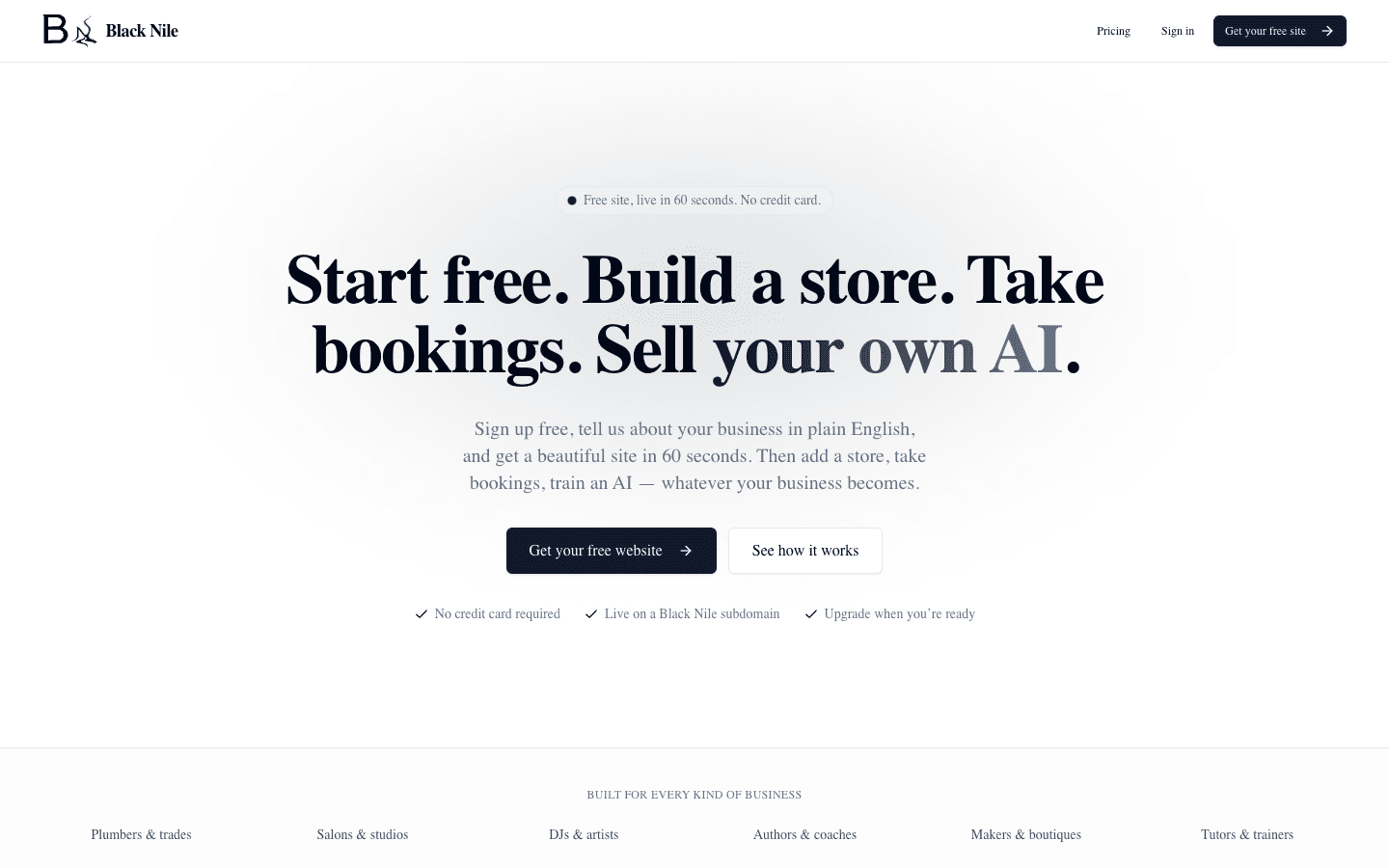
2026 · Software · Shipped
Black Nile
A conversational website builder where small businesses talk, a site appears, and their own AI answers customers — metered to the credit.
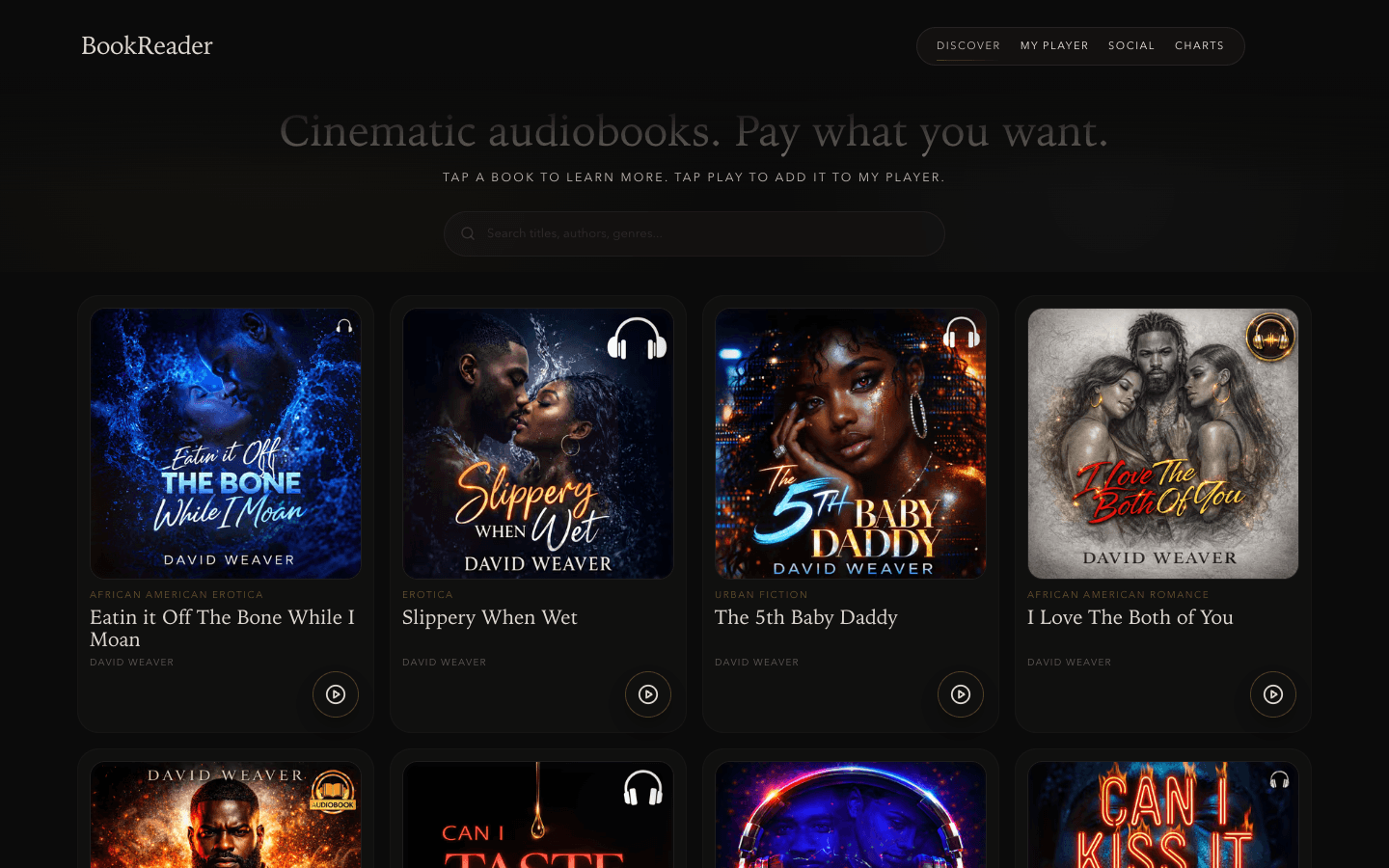
2026 · Writing · Shipped
BookReader
Cinematic audiobooks where the listener names the price — pay what you want, minimum ninety-nine cents.
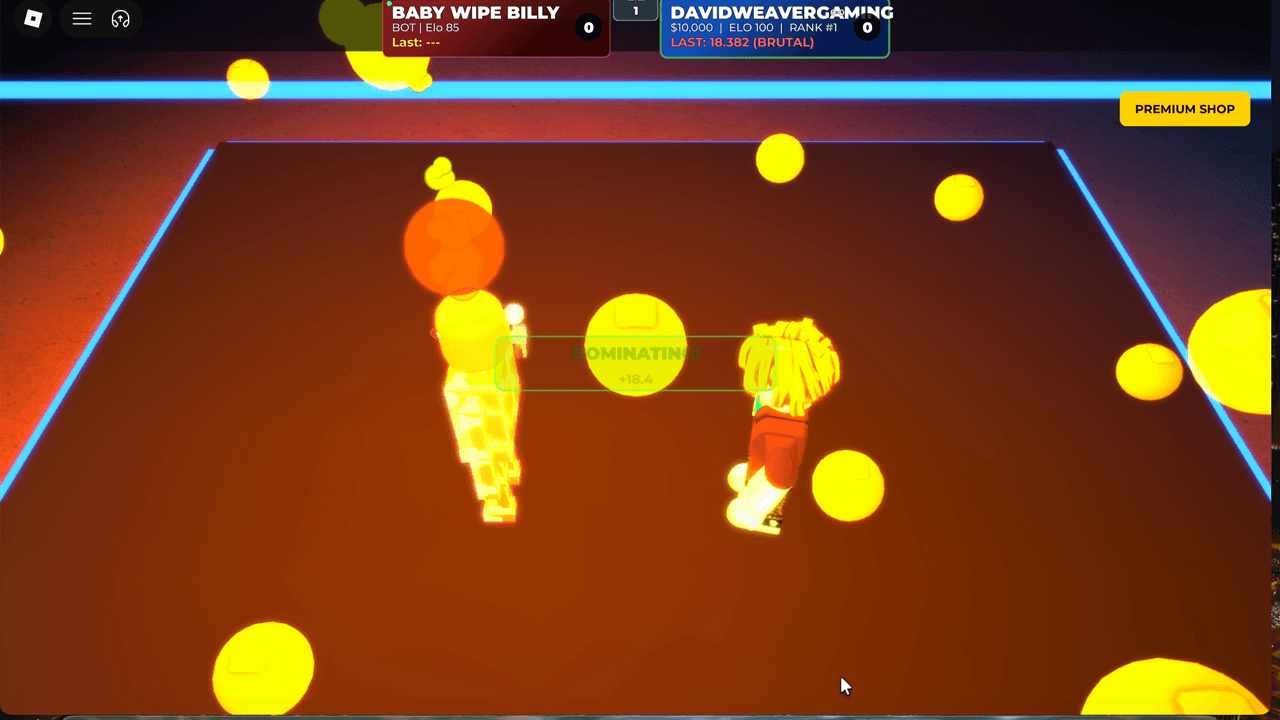
2025 · Games · Shipped
Slaptopia
Ranked 1v1 and 2v2 slap battles — new players start equal, timing decides, and the belt ladder remembers.
Straight answers
Asked often. Answered honestly.
- What is an interactive website?
- A website where the visitor's input changes the experience — scenes that follow the cursor, fabric that tears and reweaves (you just did that), products that rotate in hand, stories that unfold on scroll. The test: does your visitor DO something, or just read something?
- What are the best interactive websites to look at?
- Browse Awwwards' Site of the Day archive and Godly.website for daily curation — then notice what the winners share: one committed idea, motion with intent, and restraint. My homepage loom is my own entry in that conversation, and it's one click away.
- Do interactive websites hurt SEO or load speed?
- Badly built ones, absolutely. Engineered ones, no: content renders server-side and paints first, the experience loads after, and Core Web Vitals stay green. This page and my homepage are the live evidence — run them through PageSpeed yourself.
- How much does an interactive website cost?
- A signature interactive hero on your existing site starts in the hundreds. Fully interactive sites typically run $3,000–$15,000 depending on ambition. My website-cost page has the honest math and a calculator.
- Interactive website ideas — what actually works for a business?
- Make the interaction mean something: a barber's site where the razor follows your cursor, a bakery whose bread you watch rise on scroll, a SaaS whose data assembles itself. Decoration entertains; meaning converts. The idea is the hard part — it's also the part I love most.
- What's the difference between an interactive and an immersive website?
- Interactive responds to you; immersive surrounds you. The best work is both — my loom surrounds you with a machine and responds to your hand. In practice you want interaction first: response is what builds the memory.
- Can you add interactivity to my existing website?
- Yes — a self-contained interactive hero drops into almost any stack without a rebuild. It's the most common way clients start with me, and the fastest way to stop looking like your competitors.
- What technology do you use?
- Three.js and WebGL for 3D, custom GLSL shaders, GPU particles, canvas systems like the knit fabric above, and Next.js underneath so everything stays crawlable and fast. The tool list only matters because of what it lets your visitors feel.
- How long does an interactive website take to build?
- A signature hero: one to two weeks. A full interactive site: four to eight weeks depending on scope. You watch it come alive in staging the whole way — no black box, no big reveal at the end.
You felt what six seconds of interaction did to your attention. Now imagine your customers feeling that about you. Tell me about your market — I'll tell you the moment we'd build.