Budget by what it must earn
Your search, woven. The right budget falls out of one question: what must this site earn?
How much a website should cost depends on what it has to earn.
"How much should it cost" is a sharper question than "how much does it cost." "Does" asks for a price list. "Should" asks for the right budget — and the right budget depends entirely on the job the site has to do. A page that holds a spot while you test an idea and a page that has to close $10,000 clients are not the same purchase, even when they look alike.
So this is not another price chart. The raw ranges live on /website-cost. Here I show you how to set the ceiling: work backwards from what one customer is worth, what a stranger must believe, and what the site has to prove. Spend to that, and no further.
I'm David Weaver. I design, build, deploy, and answer the contact form — no handoffs. The interactive loom on the homepage is running proof of the craft, not a video of it. Judge that before you commit to any number.
01
Decide the job before you decide the budget
The number you should spend is set by one thing: the job the site has to do. Holding a spot while you validate an idea? Spend almost nothing. Closing a stranger on a service that bills in the thousands? Spend enough that the site can actually do it. Same word — "website" — two different purchases.
So before you compare quotes, write the job down. What must a visitor believe? What must they do next? What is it worth to you when they do it? A budget set against that sentence is defensible. A budget set against a generic price chart is a guess wearing a decimal point.
02
Get a planning number for your goal
What are you building?
What should it include?
Estimated price
$2,000 – $8,000
This is a rough estimate based on the options you picked. Tell me about the project and I'll send you an exact price. There's no charge to ask.
03
Match the budget to the job
Find the row that describes your site's real job. The dollar ranges behind each posture are on /website-cost and /pricing.
| The site's real job | What the budget should cover | The tell |
|---|---|---|
| Placeholder while you validate an idea | A template or the fixed-scope Express Website — barely anything | Nobody has to remember you yet |
| Win trust for a service that bills in the thousands | Custom design, written copy, tracking wired in | One closed client repays the whole build |
| Stand out in a crowded market | A signature moment competitors can't copy | Memory is the thing you're paying for |
| Take payments or store accounts | An app budget — this is software now, not a page | Engineering, security, and tests are not optional |
This table decides which row you're in. /website-cost puts the dollar figures on each one.
04
The arithmetic most buyers skip
Put real figures to it. If one new customer is worth $2,000 to you and the site brings ten a year, the site earns $20,000 a year. Against that, arguing over a $1,500 build versus a $4,000 build is arguing over rounding.
The expensive mistake is not overpaying by a thousand dollars — it is a cheap site that converts no one, which quietly costs you the whole $20,000. Set the budget as a fraction of what the site earns, not as the lowest sticker you can find.
05
When the honest answer is "spend less"
Sometimes the right budget is small, and a good builder will say so. If you're still testing whether anyone wants the thing, a $249 Express Website on /pricing or a Squarespace page is the correct call. You do not buy a custom site to validate an idea.
Spend the real money once the site has a real job: a stranger to convince, a sale to close, a crowded market to stand out in. Paying for craft before there is anything to convert is just a nicer way to waste it.
Proof over promises
Open the work. Judge it live.
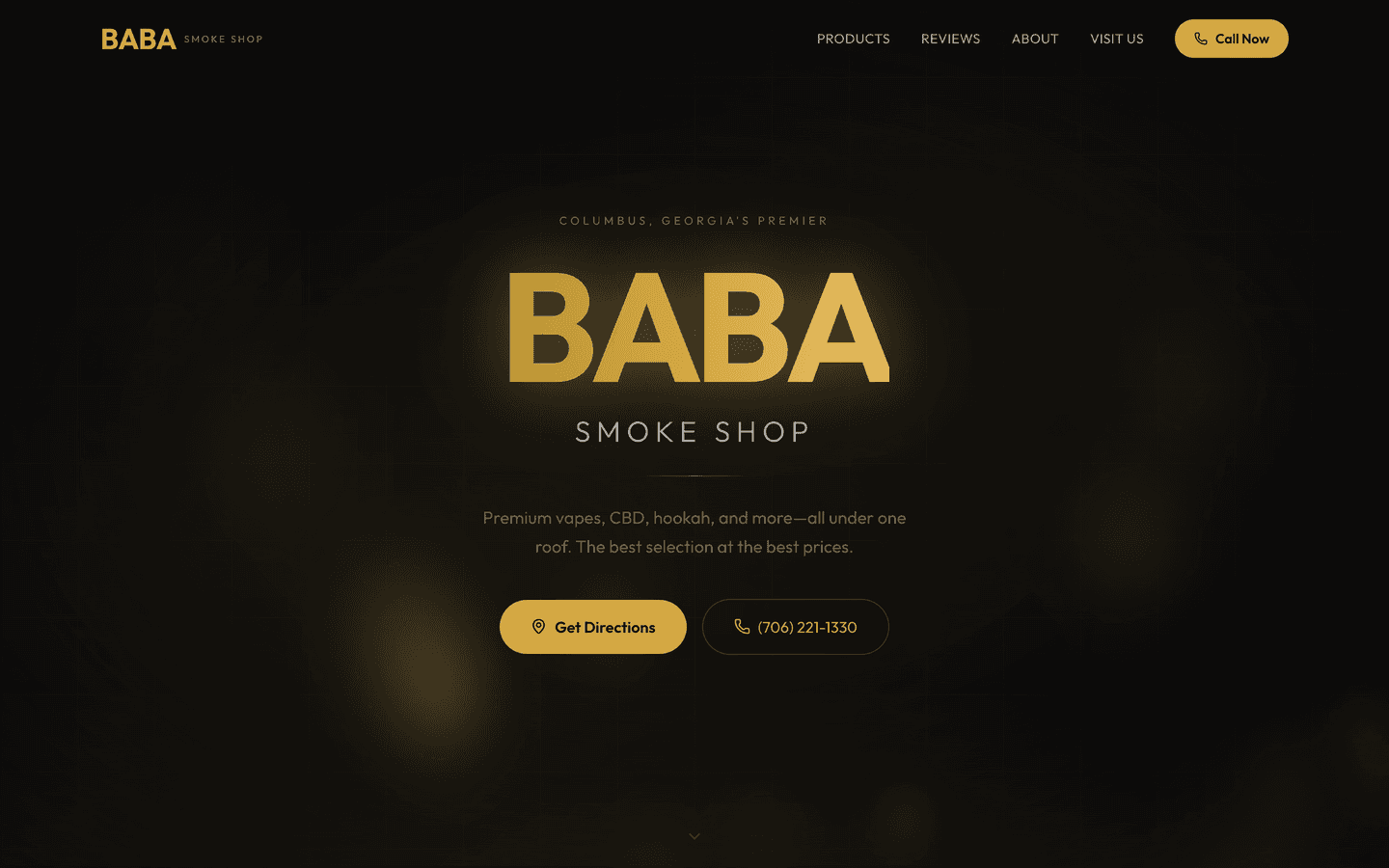
2026 · Software · Prototype
BABA Smoke Shop
A local-business marketing site for a Columbus, GA smoke shop. No backend, complete local-SEO metadata, and deliberate restraint.
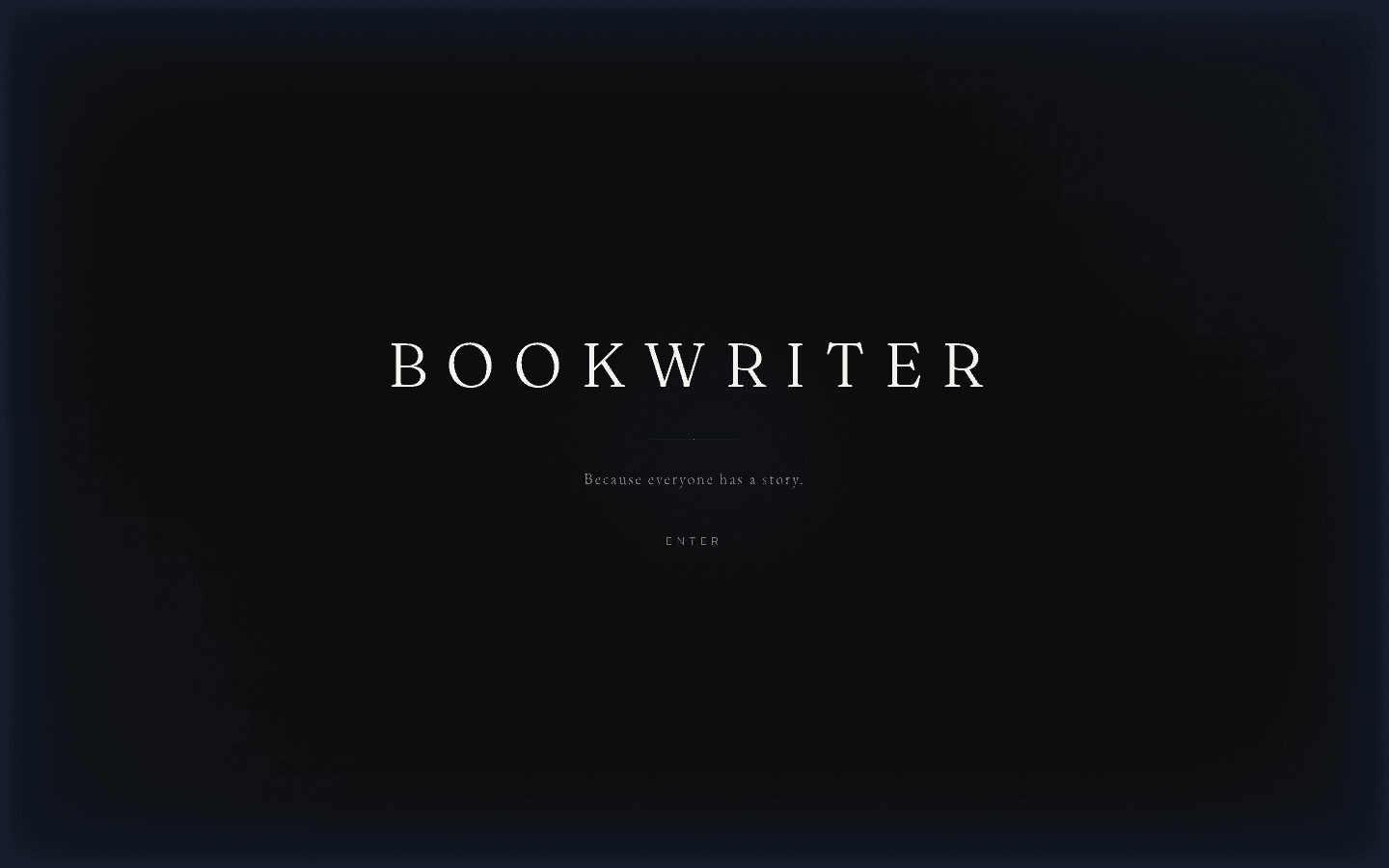
2026 · Software · Shipped
BookWriter
AI book-writing software from an author with thirty books of skin in the game — live, billing, and tested 454 files deep.
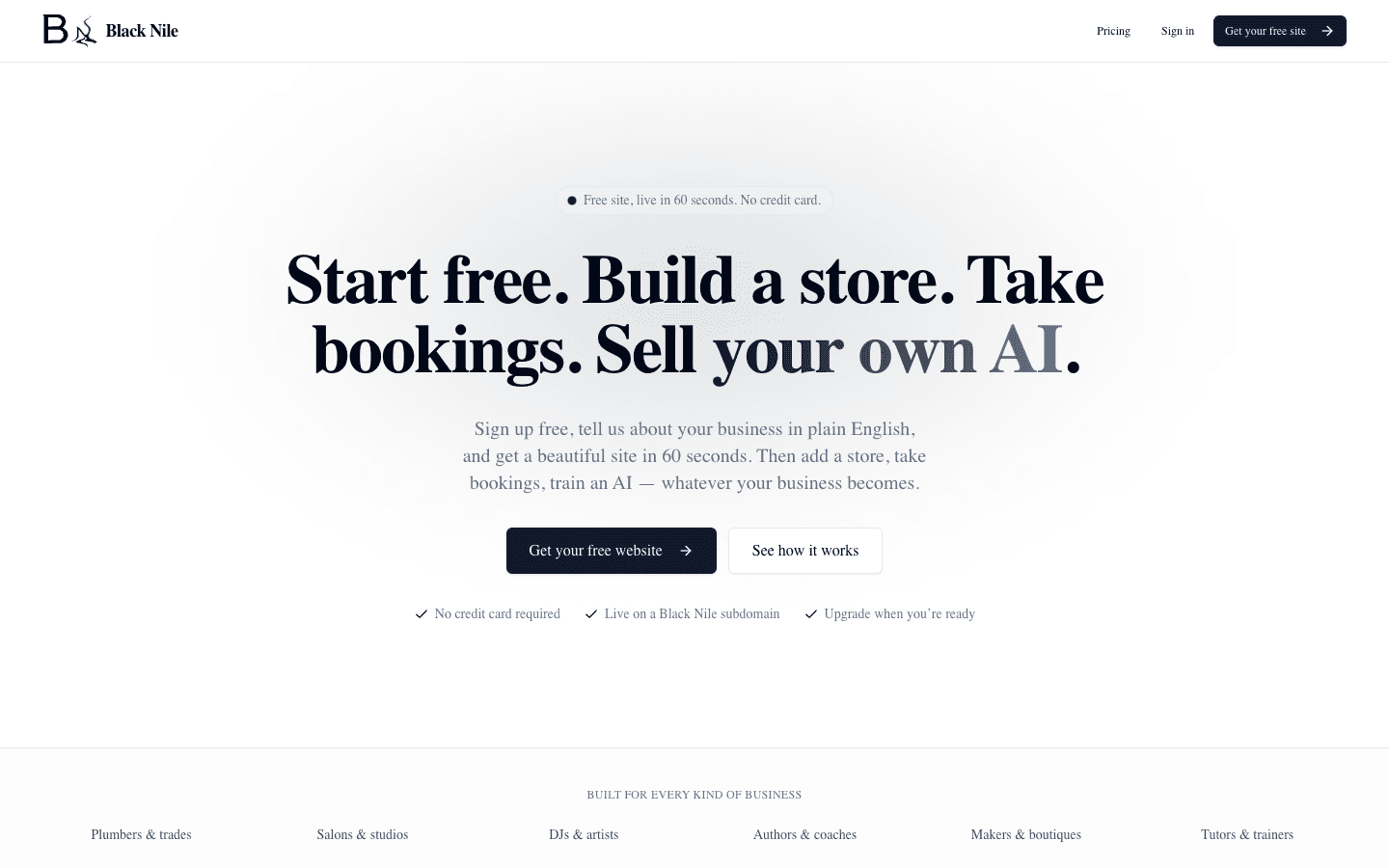
2026 · Software · Shipped
Black Nile
A conversational website builder where small businesses talk, a site appears, and their own AI answers customers — metered to the credit.
Straight answers
Asked often. Answered honestly.
- How do I decide what a website is worth to my business?
- Work backwards from one converted customer. Multiply what a new customer is worth by how many the site should bring in a year — that is what the site earns. The right build cost is a fraction of that number, not the lowest quote you can find. If you can't name those figures yet, the site's real job is still "placeholder," and you should spend accordingly.
- How much should a website cost for a small business that needs leads?
- Most small-business sites built to actually convert land between $800 and $4,000 — custom design, real copy, and tracking included rather than upsold later. Below that, something that does the converting was quietly cut. The exact number depends on what one lead is worth to you; a law firm and a lawn-care business should not spend the same.
- Is a custom site worth it if I'm just starting out?
- Usually not yet. If you're still testing whether anyone wants what you sell, a $249 Express Website on /pricing or a Squarespace page is the right budget. Buy craft once you have a real stranger to convince and a sale worth closing — not before.
- How do I know if I'm overpaying?
- Ask what each line item does for the visitor. If a cost can't be traced to design, copy, speed, measurement, or a feature a customer can see, it is overhead — usually an agency's rent and account manager. A senior independent builder puts every dollar into the work. That is the column I compete in.
- Should the budget change if the site has to take payments?
- Yes, a lot. The moment a site handles accounts or money it stops being a page and becomes software — engineering, security, and testing come with it. That is the honest reason app budgets run several times a marketing site. Don't budget for a brochure and then ask it to be a store.
- What's the least I can responsibly spend?
- For a genuine placeholder, $16–$50 a month on Wix or Squarespace, or the fixed-scope Express Website from $249 on /pricing. That is responsible while the site's only job is to exist during validation. It stops being responsible the moment customers start comparing you to competitors who invested.
Tell me what the site has to earn, and I'll tell you what it should cost — written, itemized, free.