The payback math for a small shop
Your search, knit into cloth. The payback math below is the argument.
AI integration for small business that pays back in months.
You searched "ai integration for small business" because you want the arithmetic, not a manifesto. For a shop your size, AI is worth doing when it frees enough hours to pay for the build in months — and not worth doing when it doesn't. That is the whole test. The estimator below runs it in about a minute.
Most pages for this search sell a platform or a transformation. A small business rarely needs either. It needs one repetitive task — the one quietly eating a day a week — handled by a machine wired into the tools you already use, so the same people spend that day on customers instead.
I'm David Weaver. I build these narrow, boring, profitable automations for small teams, remotely from Columbus, Georgia. One person scopes it, builds it, and answers your email. Start with the payback math, then tell me the task that hurts most.
01
The payback test: hours freed vs. build cost
SMB AI ROI estimator
Rough payback math for small-business AI: hours freed × loaded cost vs. integration investment. Conservative capture rates — not vendor ROI slides.
Repetitive hours you could free
Fully loaded cost of that time
Integration depth
Annual save ~$11,232–$19,656 · build $5,000–$15,000
~8 mo payback
Payback uses midpoints and 40–70% automation capture. Real ROI also includes error reduction and speed-to-customer — measure those after v1 ships.
02
What actually pays back in a small shop
The math is simple and unforgiving. A task has to eat real, recurring hours before a custom build earns its cost back. Four hours a week of $45 work is about $9,000 a year; capture two-thirds of it and a $6,000 build pays for itself inside a year, then keeps paying. Twenty minutes a week of the same work never gets there — buy an off-the-shelf tool for that, or leave it alone.
So the first question is never "what can AI do." It is "which task, done every week, by a person I pay, could a machine do most of." Answer that honestly and the rest is arithmetic. Answer it with wishful thinking and you buy a system that impresses your competitors and drains your account.
03
Tasks worth automating first — and what to leave alone
The pattern is boring on purpose: high frequency, low judgment, clear inputs. Here is where the payback usually lives for a small business.
Inbox and quote triage
Sorting incoming email and drafting first-pass replies or estimates from your own templates. High volume, repetitive, and a human still approves before anything sends.
The copy-paste between two systems
The form that should land in your CRM, the CRM that should land in your invoicing. Nobody sells that glue, so someone on staff is the glue. Removing it is pure freed hours.
The same five questions, all day
Order status, hours, "do you do X." A machine answers from your real data; your staff handles the sixth question that genuinely needs a person.
Bookkeeping and receipt matching
Reconciling invoices, receipts, and line items. Tedious, rule-heavy, and costly when it's billed as a bookkeeper's hourly time.
Notes into records
Turning a call or a site visit into a clean CRM entry. Small per instance, large across a year of them.
What to leave alone (for now)
Anything you touch monthly, anything where a wrong answer costs you a customer, and anything tangled in ten exceptions — the exceptions eat the savings. Automate the boring majority; keep a human on the edges.
04
Small, owned, and shipped in weeks — not a platform
Small-business AI goes wrong when it's sold as a program instead of a feature. You do not need to rip out your stack, hire a data team, or sit through a discovery phase billed by the week. You need one workflow, built narrow, wired into what you already run, shipped in a couple of weeks, and measured after.
A light build — one task, one integration — usually lands in the low-to-mid four figures and ships fast; deeper work that touches core operations costs more and is scoped in writing first. Either way you own the result: the code, the notes, the account, with no per-seat subscription that costs more as you grow. Success is a number you can check yourself, which is why the payback estimate comes before the invoice, not after.
Proof over promises
Open the work. Judge it live.
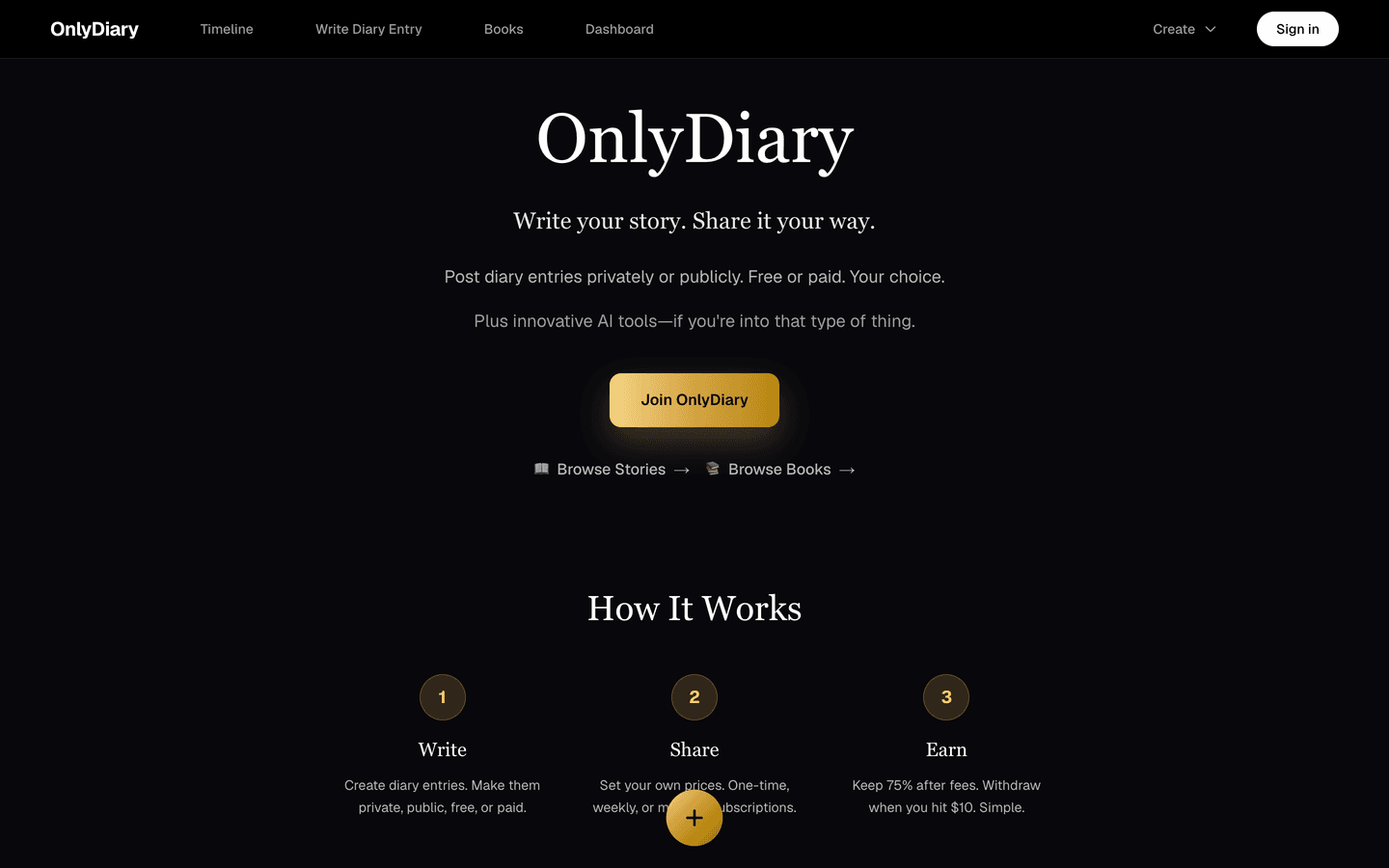
2026 · Software · Retired
OnlyDiary
An AI journaling and creative-publishing platform with real billing on two payment rails.
2026 · Software · Prototype
MarketScanner
A Kalshi prediction-market scanning agent in pure Python. When code can spend money, the safety rails are the product.
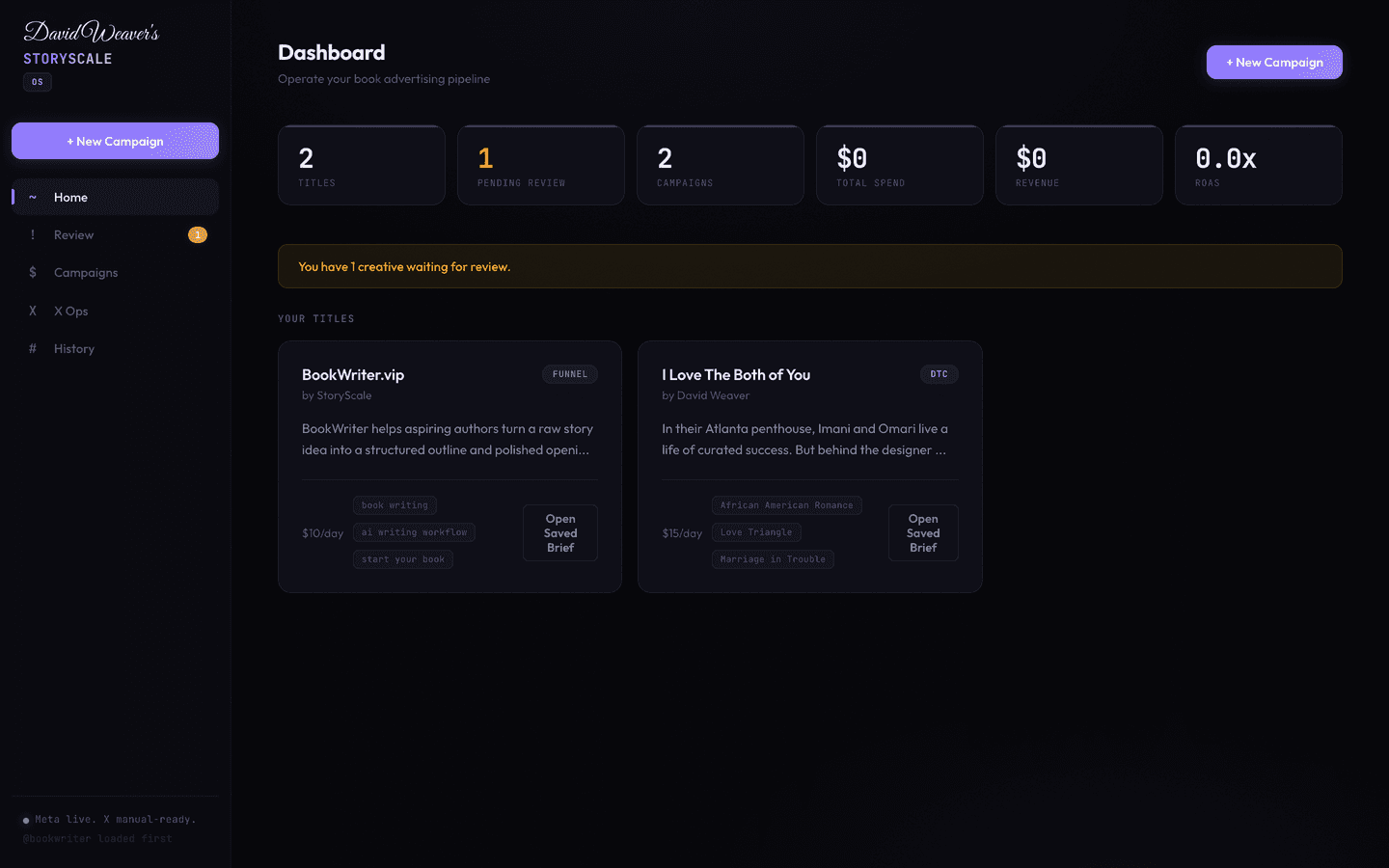
2026 · Software · Shipped
StoryScale
The internal growth engine behind BookWriter and BookReader — 20+ operational scripts, 36 API routes, ads, and video rendering.
Straight answers
Asked often. Answered honestly.
- How do I know if AI is even worth it for a shop my size?
- Run the estimator: pick the task, the hours it eats, and what that time costs you. If a build pays back in months, it's worth a conversation. If a task takes twenty minutes a week, a custom build won't pay back — use an off-the-shelf tool or skip it. Size doesn't decide this; the hours do.
- What's the smallest AI project that still makes sense?
- One task, one integration — a light assist that lands in the low-to-mid four figures and ships in roughly a couple of weeks. Inbox triage, a quote drafter, the copy-paste between two systems. Start there, measure the freed hours, then decide whether to go deeper.
- Should I buy an AI platform or have something built?
- For one or two workflows, a narrow build you own beats a per-seat platform — no subscription that scales up with your headcount, and it does exactly your job instead of a generic one. Once you have many workflows and a team to administer them, a platform can win. For most small shops, you're not there yet.
- What's a realistic payback period for a small business?
- Months, not years, when the task genuinely eats recurring hours. The estimator assumes a build captures 40–70% of those hours — deliberately conservative, because real projects hit exceptions. It ignores error reduction and faster replies to customers, which are real but harder to price; measure those after the first version ships.
- Will this replace my staff?
- No, and I'd be careful of anyone who promises it will. It removes the repetitive slice of a job so the same people spend their time on the work that needs a human — the judgment calls, the awkward customer, the exception. You free hours, not headcount.
- My data is messy and I'm not technical. Is that a problem?
- It's the normal starting point. Wiring the systems that don't talk to each other is part of the job, not a prerequisite you have to solve first. You don't need to be technical — you need to name the one task that eats the most hours. I handle the rest.
Run the estimate, then send me the task that eats the most hours. I'll tell you honestly whether a build pays back — free, from the person who would build it.