Craft, scored honestly
Your search, knit into cloth. Awards are a lagging signal. The weave is the point.
Awwwards websites: score yours before you copy one.
You searched 'awwwards websites' because one of them did something to your chest — a scroll that felt like cinema, a cursor that felt like physics, a brand that suddenly had weight. Then you looked at your own site and felt the gap. That gap is rarely taste. It is investment in interaction, performance, and editorial discipline that most teams never budget for.
This page is not a screenshot gallery. It is a working scorecard that rates a site on the axes award-caliber work actually lives on: composition, clarity, motion, content, performance, and technical ambition. Run it on your current site, on a competitor, or on the fantasy in your head. Then decide whether you need a prettier template or a builder who ships in that league.
I'm David Weaver. The homepage here is a real-time Jacquard loom in WebGL — green Core Web Vitals, the H1 as LCP, spectacle mounted after meaning. That is the standard behind every number the scorecard reports. Award-caliber and commercial are not enemies on my builds; every interactive moment has to earn attention, trust, or conversion, or it gets cut.
01
Score your site on the six craft axes.
Is your site Awwwards-worthy?
Rate each axis honestly against the site you have now (or the one you're planning). No emails. Instant score.
Pick an axis
Layout, type, color, restraint
How does it score?
Not yet award-caliber
18 / 60
The gap isn't taste — it's investment in craft. Awwwards sites are systems of interaction, not prettier templates. Start with a hero that earns the first three seconds.
02
What 'Awwwards-caliber' really means
There is no badge that makes a site award-caliber. What jurors respond to is coherence: type, motion, narrative, and engineering working as one instrument instead of six plugins stacked on a theme. A shortlisted site solves the hard version of the problem — unforgettable without being unusable. Most sites solve the easy version and call it done.
People searching this term are usually doing one of three jobs: gathering inspiration for a redesign, sizing up a competitor, or shopping for someone who can deliver that energy on a real timeline. All three go wrong the same way — you pin thirty heroes, hire a designer who recreates the surface, and ship something that looks expensive in Figma and dies on a mid-range Android. A score interrupts that. It tells you which axis is actually weak before you spend on the wrong fix.
03
The six axes, and how to grade your own site
You do not need a jury seat to evaluate craft. Grade each axis 1–10 honestly; the tool above does the same math faster. The revealing move is comparing scores — a 9 on design next to a 3 on content is a museum brochure, not a business.
Composition
Not 'is it trendy' — is it composed? Hierarchy, restraint, type that carries authority, spacing that breathes. Award sites look inevitable, not crowded. Test: if removing any element would break the rhythm, it is working.
Clarity
Can a stranger understand the offer in ten seconds and reach the primary action without a treasure map? This is where award sites fail commercially — motion used as smoke, navigation used as riddle. Ambiguity is not sophisticated; it is lazy.
Motion
Scroll choreography and pointer feedback that answer the hand, not a timer nobody asked for. Reduced-motion is a designed state, not a fallback bolted on at the end. Good motion you feel; you rarely notice it.
Content
Words that sell a specific outcome to a specific buyer. No lorem in production, no 'solutions for every need.' A cinematic shell around generic copy is an expensive shrug. If you cannot name the one belief a visitor must leave with, the writing is not done.
Performance
Green Core Web Vitals are proof the builder treats the browser as a real-time medium with budgets. The headline is the LCP; spectacle loads after it. A site that wins a design award and fails Lighthouse is a costume, not a craft object.
Technical ambition
Custom WebGL, generative systems, one-of-one shaders — work you cannot buy as a theme. Ambition without engineering is vapor; engineering without ambition is a CMS skin. The shortlist lives where both are true.
04
When you should NOT chase award energy
Honest counsel, no charge: award-caliber craft is the wrong purchase more often than the internet admits. Skip it when any of these is true.
Conversion is the only job
For a lead-gen page whose whole purpose is a form fill, heavy interaction usually costs you. Every animated distraction between the promise and the button is friction. A calm, fast, boring page frequently beats an ambitious one on revenue — and I will tell you when yours is that page.
You cannot afford the performance tax
Signature motion and WebGL add weight. Engineered well they stay green, but they demand budget and discipline. If mobile Core Web Vitals are already shaky and you have no room to fix them properly, award energy will make the numbers worse, not the brand better.
You need volume, not a flagship
Fifty landing pages for paid traffic tomorrow is a different product than one crafted experience. I build both, but not as the same deliverable. Do not spend flagship money on a page nobody will remember and everybody will bounce from.
Nobody will own the custom system
A one-of-one build needs someone who can maintain it. If your team wants a theme they can restyle forever without an engineer, that is a legitimate choice — say it up front and we scope for it instead of pretending.
05
If the score says commission it
Award-caliber work does not start in a particle library. It starts with one commercial sentence: who is this for, what must they believe, what must they do. Information architecture follows, then a motion thesis, then a performance budget that says what is allowed to cost milliseconds. Only after that do you earn the spectacular layer. And the last mile is subtraction — most nearly-great sites are ruined by one extra effect, one extra font, one more scroll hijack. The gap between 'strong' and 'award' on the scorecard is usually something removed.
You would work with me directly — no account manager, no junior surprise in week four. Run the scorecard, then send the contact form (it pre-tags your inquiry as an app build) with your weakest axes named. I reply with a written neighborhood: cost, timeline, and an honest read on whether award-caliber is even the right goal for your moment. Before any of that, open /work and judge the craft yourself — the loom on the homepage is not a metaphor, it is the interview. Email is hello@davidweaver.codes, and it reaches me.
Proof over promises
Open the work. Judge it live.
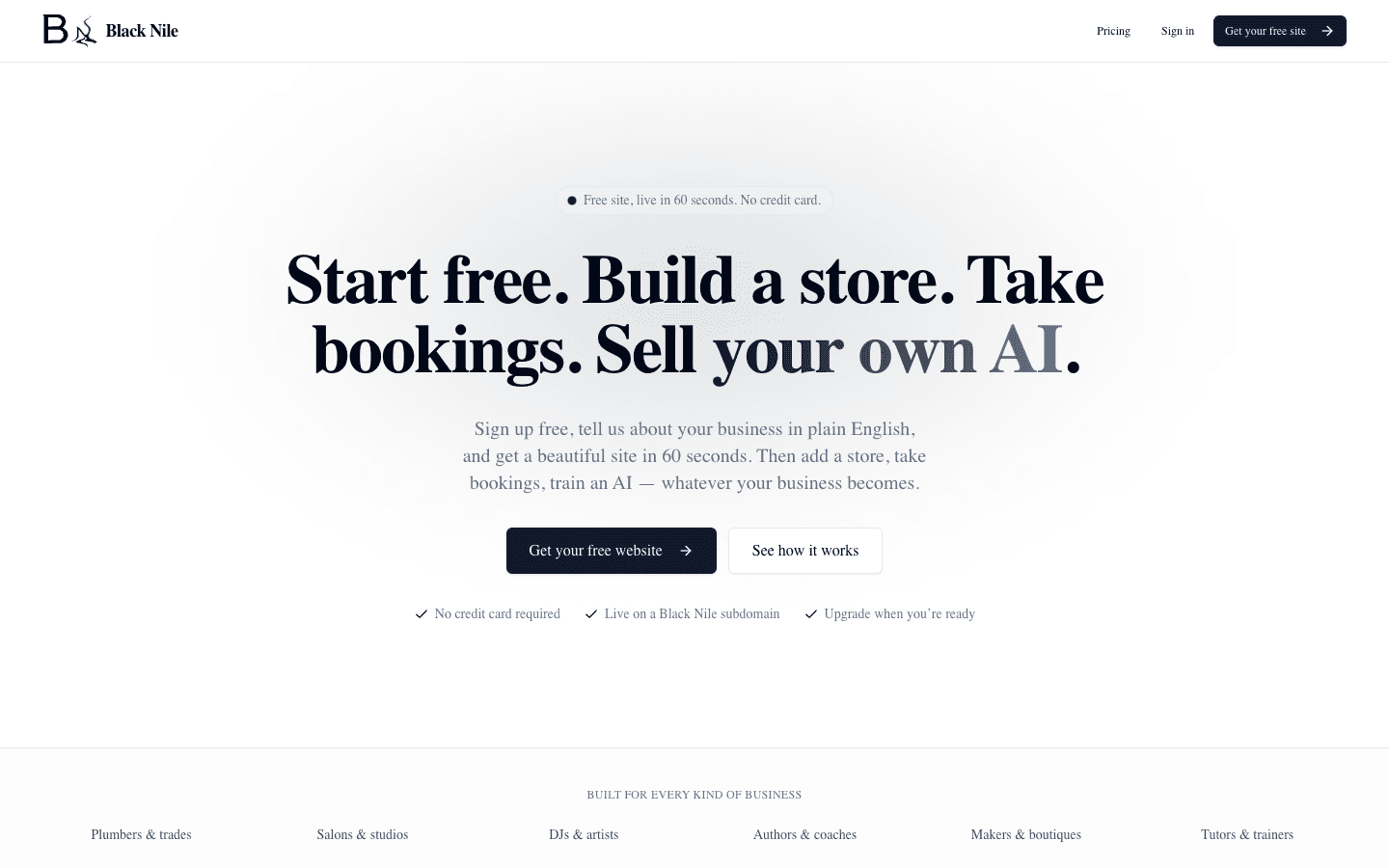
2026 · Software · Shipped
Black Nile
A conversational website builder where small businesses talk, a site appears, and their own AI answers customers — metered to the credit.
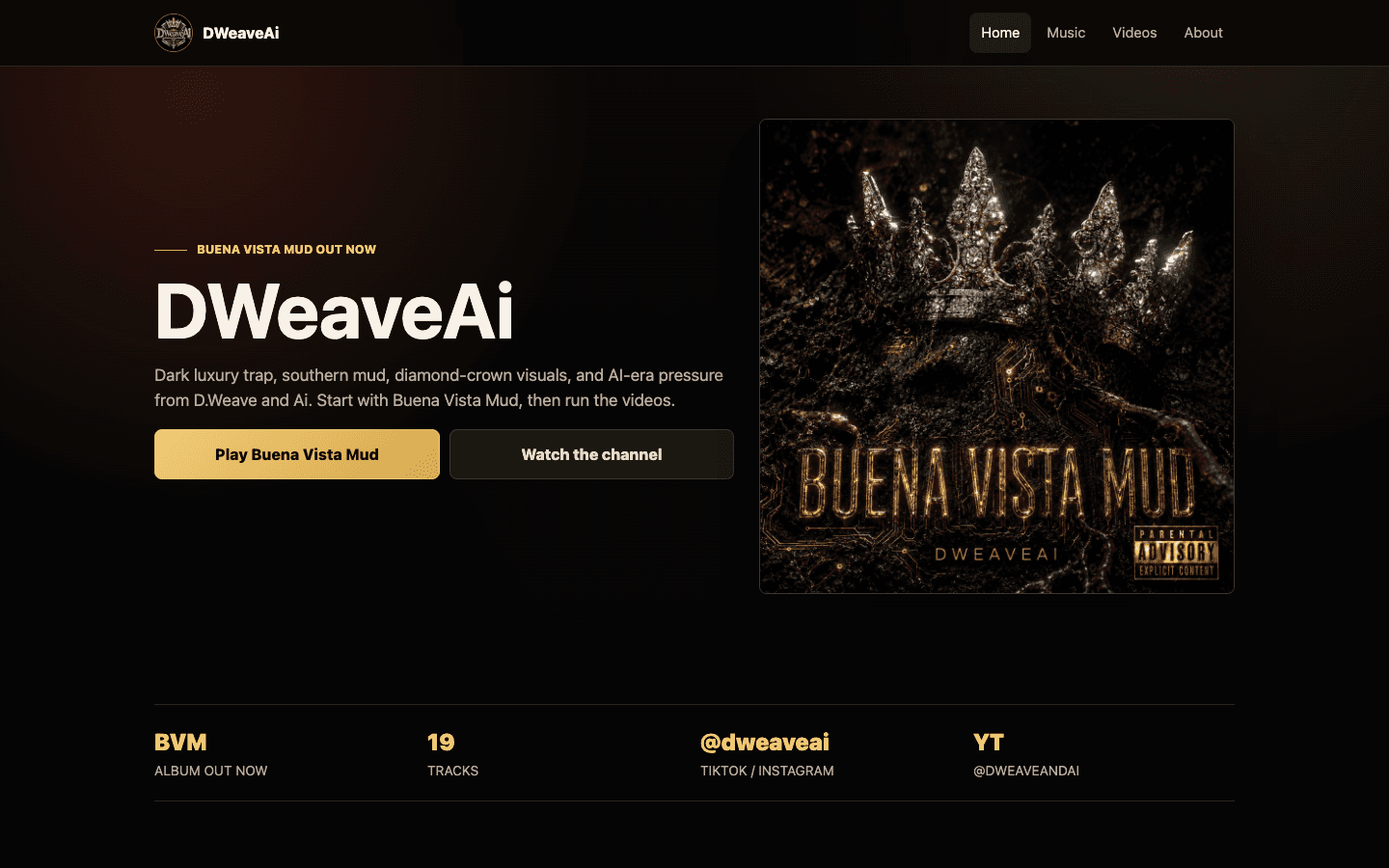
2026 · Sound · Shipped
DWeaveAi Fan Funnel
A static fan funnel, live at dweaveai.space — one owned landing page per song, routing listeners to every streaming platform.
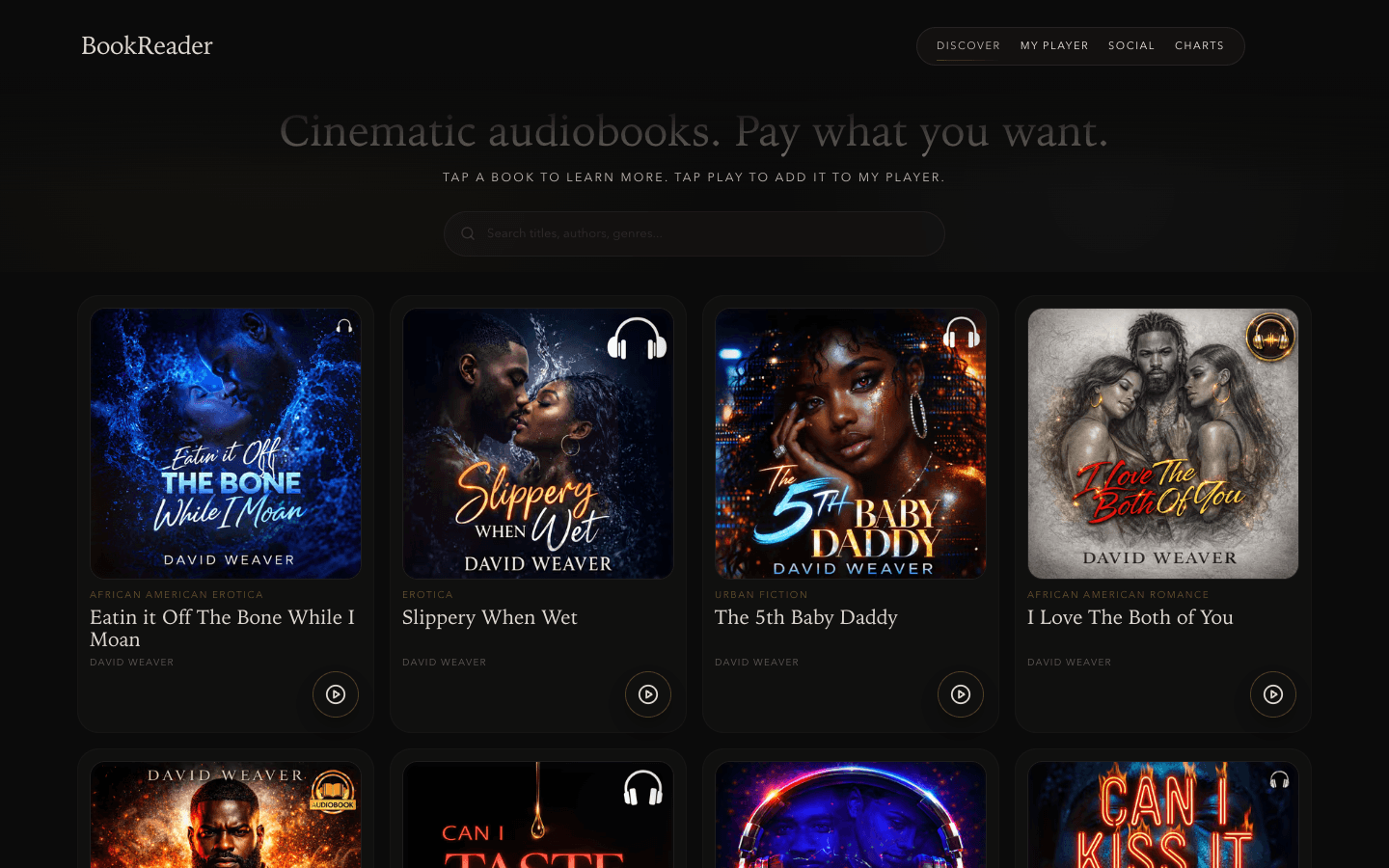
2026 · Writing · Shipped
BookReader
Cinematic audiobooks where the listener names the price — pay what you want, minimum ninety-nine cents.
Straight answers
Asked often. Answered honestly.
- What actually separates an Awwwards-caliber site from one that just looks expensive?
- Coherence under pressure. An expensive-looking site is a good theme plus stock motion plus committee copy. An award-caliber site makes type, motion, content, and engineering serve one idea, and it stays fast and clear while doing it. The tell is whether it survives your phone and a stranger's ten-second read, not whether it dazzles in a reel.
- Can I score my own site without being a designer?
- Yes — that is the whole point of the tool above. Grade the six axes one to ten and read the spread between them. Your weakest axis, not your average, is what to fix first. A site scoring 9 on visuals and 3 on clarity does not need more polish; it needs a rewrite of the path to the button.
- Can chasing award energy actually hurt my conversion rate?
- Often, yes. Motion and spectacle placed between the promise and the primary action add friction, and 'ambiguous on purpose' is a real failure mode for award-bait sites. If your only job is filling a form, a calm fast page usually out-earns an ambitious one. I will say so rather than sell you a build you do not need.
- Does an award-caliber site have to be slow?
- No — but only if it is engineered as one. HTML-first content, the headline as LCP, WebGL and heavy motion loaded after meaning, reduced-motion treated as a designed state. Bolt spectacle onto the critical path and Core Web Vitals collapse. This site runs green with a real-time WebGL hero, which is the standing proof it can be done.
- Should I submit my site to Awwwards?
- Only when the work is genuinely in that league — and the scorecard is the honesty filter. I will never pad a mediocre build to chase a submission fee. If the score is strong across every axis, a submission is a reasonable bet; if one axis is a 3, fix that first and the badge takes care of itself.
- Can you raise my score without a full rebuild?
- Frequently. A signature hero, a coherent motion system, and a copy rewrite can move several axes without greenfield work. The scorecard tells us which axes are worth touching and which are already fine — so you pay for the gap, not for a rebuild you did not need.
You have a score. The gap is taste, budget, or a missing builder — I only close the last one, and I'll tell you honestly which one you have.